
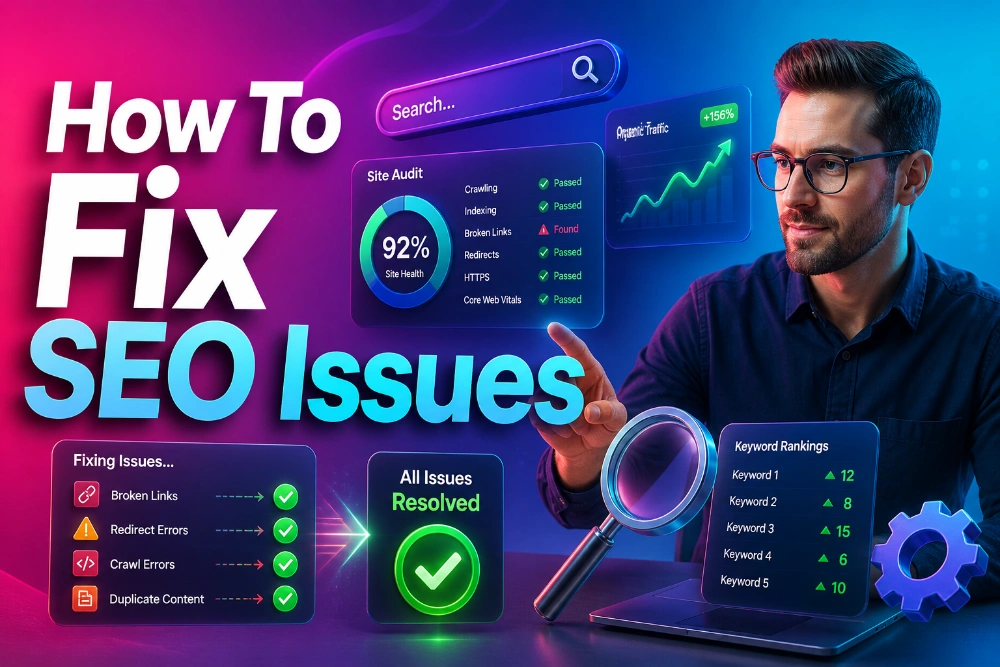
Search engine optimization (SEO) is a fundamental aspect of any website’s success, but issues can arise that negatively impact your rankings and visibility. Knowing how to fix SEO issues is crucial for maintaining a healthy, high-performing website.
In this guide, we’ll walk you through common SEO problems and how to resolve them effectively. Whether you’re a seasoned webmaster or a beginner, these strategies will help you ensure that your site is optimized for search engines.
Common SEO Issues and How to Address Them
SEO problems can range from simple errors like missing meta tags to more complex issues like slow website speed. Identifying these problems is the first step toward fixing them. The good news is that many SEO issues can be fixed with just a few tweaks.
For example, many website owners overlook broken links, which can harm user experience and SEO rankings. Ensuring that your site is free of dead links is important and there are tools you can use, just as TikTok users can use TikTok Viewer to check other people’s profiles on the platform.
Optimizing Site Speed for Better SEO Results
One of the most critical SEO factors is site speed. Websites that load slowly tend to have higher bounce rates, which can negatively impact search engine rankings. The faster your site loads, the better the user experience, leading to higher rankings. Tools like Google PageSpeed Insights can be used to assess your website’s load time and suggest ways to speed it up.
Ensure that you’re using compressed images, optimizing your code, and leveraging browser caching to make your site faster. By taking these steps, you’ll provide a smoother experience for visitors and increase the likelihood of your site ranking higher on search engines.
Fixing Broken Links and 404 Errors
Broken links are a common SEO problem that can harm your site’s credibility. When a user clicks on a link that leads to a 404 error page, it can lead to frustration and a higher bounce rate. To fix this issue, regularly audit your website for broken links.
If you have internal links that lead to non-existent pages, update them or redirect them to relevant content. A tool like SEO Spider Tool can help you quickly identify these issues.
Ensuring Mobile-Friendliness
With more users accessing websites from mobile devices, ensuring your site is mobile-friendly is vital for SEO. Google considers mobile responsiveness as a ranking factor, so a non-mobile-friendly website can negatively impact your SEO efforts. Use responsive web design or create a separate mobile version of your site. Tools like Google Mobile-Friendly Test can help you evaluate and improve your website’s mobile performance.
Properly Implementing Structured Data
Structured data is a type of code that helps search engines understand the content of your site more clearly. Using structured data can improve your SEO by making it easier for search engines to crawl and index your site.
For example, implementing schema markup for products, reviews, and blog posts helps search engines understand the context of your content. This can increase the chances of appearing in rich snippets, which are a valuable feature in search results.
Improving Meta Tags and Descriptions
Meta tags and descriptions play an important role in SEO because they provide search engines with information about your website’s content. Missing or poorly written meta descriptions can hurt your SEO.
Make sure that each page has a unique meta description that accurately reflects the content and includes target keywords. Proper meta tags help improve click-through rates from search results, which in turn boosts your SEO rankings.
Removing Duplicate Content
Duplicate content can harm your SEO efforts by confusing search engines. Search engines may not know which page to prioritize, resulting in a drop in rankings for both pages.
Tools like SEO Spider Tool can help you identify duplicate content issues. To fix this, consolidate duplicate pages or use canonical tags to point search engines to the preferred version of the content.
Using Internal Linking to Improve Site Structure
Internal linking is an essential part of SEO because it helps distribute link equity throughout your site. When done properly, internal links can boost the authority of your pages and improve navigation. Ensure that your internal links are relevant and lead to high-quality content. Additionally, using descriptive anchor text for your internal links can enhance the SEO of both the page you are linking from and the page you are linking to.
For example, linking to a helpful guide such as how to remove all reposts on TikTok can not only assist your audience but also improve the authority of both pages involved.
Improving Website Security with HTTPS
Website security is another important ranking factor. Websites with HTTPS are considered more secure than those without it, and search engines like Google reward secure sites with better rankings. To fix security issues, ensure your site uses HTTPS instead of HTTP. This involves installing an SSL certificate, which encrypts communication between the server and users, protecting sensitive information and enhancing user trust.
Handling Site Architecture and URL Structure
Your site’s architecture and URL structure play a critical role in SEO. Clean, easy-to-follow URLs help both search engines and users navigate your website more effectively. Avoid using long, complex URLs with unnecessary parameters. Keep URLs simple and descriptive, ideally including relevant keywords. A clear site structure also helps search engines crawl your site more efficiently, leading to better rankings.
Why SEO Issues Matter for Business Success
Fixing SEO issues isn’t just about improving rankings—it’s about driving more qualified traffic to your website and providing users with the best experience. For businesses, this means increased visibility, more leads, and higher conversion rates. Whether you’re running an e-commerce store or a blog, addressing SEO issues is essential for long-term growth. Fixing issues like broken links, slow loading times, and poor mobile responsiveness can give your site a significant competitive edge.
If you are struggling with SEO issues and want to increase your website’s visibility, learning more about the optimization strategies is key. Topics like why can’t I comment pictures on TikTok helps you understand common challenges and how to resolve them efficiently.
Conclusion:
In conclusion, fixing SEO issues is an ongoing process that requires attention to detail. Regular audits and proactive fixes can ensure your website remains optimized for both users and search engines. As you resolve these issues, focus on improving user experience and providing high-quality, relevant content.
time, these efforts will result in improved rankings, more traffic, and greater business success. By following the guidelines outlined here, you’ll be on your way to creating an SEO-friendly website that performs well in search results.